The front garden rule (England)
In England, if you pave more than 5 m² of front garden with an impermeable surface that drains onto the road, you need planning permission. Permeable surfaces – or impermeable ones that drain to a lawn or border – don't need it.
Source: Planning Portal – paving your front garden · last checked 14 November 2026
Listed buildings, conservation areas and flats can have different rules – check with your council.
The front garden rule in plain English
The rule is about rainwater. Hard, sealed surfaces send water into the road and drains, which adds to flooding. So in a front garden, a large impermeable surface that drains onto the road needs permission – but a permeable one doesn't.
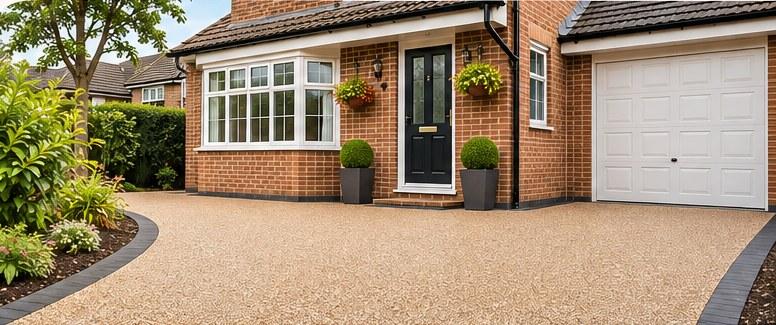
Permeable means water soaks through the surface into the ground. Resin-bound surfaces, permeable block paving and gravel all work this way. Standard tarmac, concrete and standard block paving don't, unless they drain to a lawn, border or soakaway on your property.
When you should always check with the council
Even with a permeable surface, check with your council's planning team first if:
- Your home is a listed building
- You live in a conservation area
- Your property is a flat or maisonette (permitted development rules are different)
- You want to remove a boundary wall, a protected tree or a large hedge
- You need a new access onto a main ('A' or 'B') road
Don't forget the dropped kerb
Planning permission and a dropped kerb are separate. If you need to drive over the pavement to reach your driveway, you'll need a dropped kerb approved by your local highways authority – even if the driveway itself doesn't need planning permission.
This guide is general information, not legal advice. Rules can change and vary between councils – always check with yours before starting work.